Beginning a witchcraft journey is often a personal and transformative process. Individuals may approach the craft for various reasons, and identifying a personal path can be helpful. This guide presents factual information and practical steps for exploring witchcraft.
One common starting point is the creation of a sacred space. This space may be as simple as a small altar or as elaborate as a dedicated room. Many practitioners choose to include items such as herbs, crystals, candles, and elemental symbols. The arrangement and contents of this space often change as one’s practice develops.
Journaling is frequently used as a tool for self-reflection. Recording thoughts, dreams, and experiences can help clarify interests, such as nature work, divination, spellcraft, or ancestral practices. Over time, a journal may serve as a useful record of personal growth and exploration.
Meditation and mindfulness are foundational in many witchcraft traditions. Spending time in nature and practicing meditation can support a deeper connection to intuition and the environment. Focusing on breath and sensory experiences is a common approach.
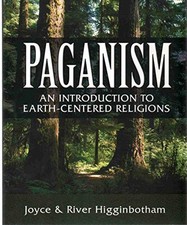
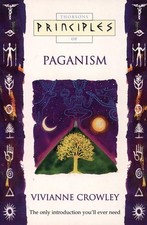
Study is another important aspect. Reading books on mythology, folklore, herbalism, and the history of witchcraft can provide context and inspiration. Consulting reputable sources and learning about different traditions may broaden understanding. There is no universally accepted method; each practitioner’s path is individual.
Rituals are often used to mark transitions or set intentions. Some begin with simple practices, such as lighting a candle for clarity or gratitude. With experience, more complex rituals may be developed for seasonal festivals, lunar phases, or personal milestones.
For example, a ritual to welcome new beginnings can be adapted for various life stages. This ritual is sometimes used to welcome a new child into a family, whether by birth, adoption, or blending of families. It may also be modified for teenagers or adults entering new phases.
The ritual may be performed over seven consecutive hours or days, using a seven-branched candlestick and lighting a candle at each interval. The order of invoking the angels is flexible, and substitutions for candles, incense, or crystals are possible if specific items are unavailable.
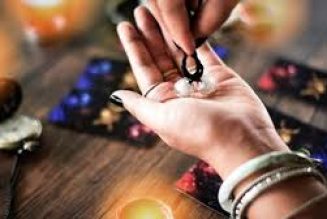
Each day or hour, a candle and incense are lit for a specific archangel, accompanied by a corresponding crystal. The crystal is passed through the candle flame and incense smoke, with a brief invocation for the angel’s qualities to bless the individual.
The sequence is as follows: Michael (clear quartz, illumination and protection), Gabriel (moonstone, wisdom and compassion), Samael (bloodstone, courage), Raphael (citrine, healing), Sachiel (lapis lazuli, abundance), Anael (rose quartz, love), and Cassiel (obsidian, patience and perseverance).
After each invocation, the crystal is placed in a dish, and the candle is extinguished, symbolically sending its light to the person. The incense is left to burn, and the remaining time is often spent in positive, family-oriented activities.
On the final day, all candles and incense are left to burn through. The crystals are then given to the individual as a symbol of the blessings received.
This ritual can be adjusted to meet the needs of the family or individual, with a focus on welcoming, protection, and support for new beginnings.
Witchcraft often emphasizes connection—to oneself, to nature, and to unseen influences. Intuition and personal experience are valued, and practices may evolve over time.
Some practitioners seek out community, finding support and inspiration in group settings. Sharing knowledge and experiences can contribute to a deeper understanding of the craft.
Progress in witchcraft is typically gradual. Paths may change direction, and both achievements and challenges are considered part of the journey.
The journey of witchcraft can be illuminated by wisdom, love, and a sense of wonder.








T