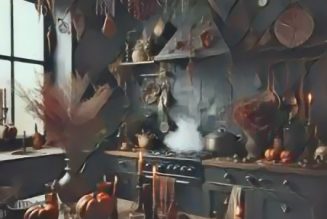
The word “hearth” has its roots in Old English, originally referring to the area of floor surrounding a fireplace, or the lower part of a furnace where molten metal would collect during smelting. Over centuries, the hearth became much more than a physical location. It evolved into a symbol of domestic comfort, warmth, and security, often regarded as the very heart of the home. In many cultures, the hearth was the center of family life, a place where meals were prepared, stories were shared, and traditions were passed down through generations.
Hearth craft, as a spiritual practice, draws upon this deep historical and cultural significance. It is a path that centers on the home and the everyday activities that take place within it. Those who practice hearth craft often focus their spiritual work on nurturing their living space, caring for loved ones, and infusing daily routines with intention and meaning. Unlike some other forms of witchcraft that may involve elaborate rituals or strict ceremonial guidelines, hearth craft is typically grounded in practicality and simplicity.
The roots of hearth craft can be traced to the traditions of house witches, kitchen witches, and green witches, all of whom have historically worked with what was available in their immediate environment. These practices were shaped by necessity and resourcefulness, making use of common household items, herbs from the garden, and the rhythms of daily life. Hearth craft, therefore, is accessible to anyone, regardless of background or experience, and can be adapted to suit individual needs and circumstances.
When considering hearth craft, it may be helpful to keep a few key concepts in mind. These include:
Simple—Hearth craft often emphasizes straightforward, uncomplicated practices that can be woven into daily routines.
Practical—The focus is on actions that have tangible benefits for the home and those who live within it.
Family Related—Many hearth craft traditions involve caring for family members, honoring ancestors, and fostering a sense of belonging.
Domestic—The home itself is seen as sacred, and everyday tasks such as cooking, cleaning, and tending to the hearth are imbued with spiritual significance.
Everyday—Rather than being reserved for special occasions, hearth craft is practiced as part of ordinary life, making spirituality a constant presence.
Household—The tools and materials used in hearth craft are often those found around the home, reinforcing the idea that magic can be found in the familiar and the mundane.
In summary, hearth craft is a path that honors the home as a sacred space and encourages practitioners to find meaning and magic in the routines of daily living. By embracing simplicity, practicality, and a deep connection to the domestic sphere, hearth craft offers a welcoming and accessible approach to spiritual practice.