Ravens and crows have played important roles in the myths, folklore, and spiritual beliefs of many cultures throughout history. Their intelligence, adaptability, and striking appearance have led people to view them with both admiration and caution.
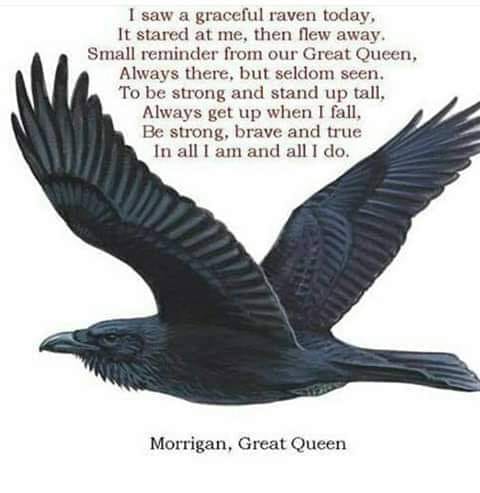
In Celtic mythology, the warrior goddess Morrighan is often linked to crows and ravens. She sometimes appears as one of these birds, or is seen with a group of them—usually three. Seeing these birds was thought to mean Morrighan was watching, or perhaps about to visit. On battlefields, their presence was believed to signal her influence and possibly the outcome of the fight.
In Welsh mythology, especially in the stories of the Mabinogion, the raven is seen as a sign of death. Witches and sorcerers were believed to transform into ravens to escape capture. This idea of transformation and moving between worlds appears often in European folklore.
Norse mythology also features ravens. Odin, the chief god, is often shown with two ravens named Huginn and Muninn, meaning “thought” and “memory.” These birds travel the world each day, gathering information for Odin. Early art often shows Odin with these two black birds, highlighting their role as messengers and symbols of wisdom.
In Native American traditions, ravens and crows are also significant. The raven is often a trickster, similar to Coyote, and appears in many stories about mischief and transformation. In the Pacific Northwest, Raven is credited with creating the world, bringing light to people, and teaching lessons through cleverness. Some tribes, like the Haida and Tlingit, see Raven as a cultural hero, while others view him as a bringer of chaos or a stealer of souls.
Crows are important in Native American stories as well. Their intelligence is often highlighted. In some tribes, crows and ravens are seen as the same, while in others, they are different characters. Crows are also used as clan animals in tribes such as the Chippewa, Hopi, Tlingit, and Pueblo. Clan animals represent family lineage, spiritual guidance, and a connection to nature.
In Japanese mythology, the Yatagarasu is a three-legged crow sent by the gods as a divine messenger. This crow is a symbol of guidance and heavenly intervention, and its appearance is seen as a sign of important change or the presence of divine will.
In Chinese folklore, the crow is connected to the sun. The three-legged crow, called the Sanzuwu, is said to live in the sun and represents the yang principle, vitality, and cosmic order. Ancient Chinese art often shows this crow inside a solar disk, highlighting its importance.
In Hindu tradition, crows are believed to be linked to ancestors. During the festival of Pitru Paksha, people offer food to crows to honor and appease departed souls. Seeing a crow during these rituals is considered a good sign, meaning the ancestors have accepted the offerings.
Ravens also appear in Christian stories. Although they are called “unclean” in the Bible, Genesis says that after the flood, the raven was the first bird Noah sent from the ark to look for land. In the Hebrew Talmud, ravens are said to have taught humans how to deal with death. When Cain killed Abel, a raven showed Adam and Eve how to bury the body, since they had never done so before.
In literature and popular culture, ravens and crows remain powerful symbols. Edgar Allan Poe’s poem “The Raven” made the bird famous as a sign of doom and a messenger from the other side. In Shakespeare’s plays, crows and ravens are often linked to omens, fate, and the supernatural.
The number of crows or ravens seen together is also meaningful in many traditions. In British folklore, a rhyme explains the meaning of seeing different numbers of crows: “One for sorrow, two for joy, three for a girl, four for a boy, five for silver, six for gold, seven for a secret never to be told.” Similar rhymes exist in Europe and North America, showing the widespread belief in the birds’ ability to predict the future.
In some places, it is not just seeing a crow or raven, but how many you see that matters.
In many cultures, killing a crow is considered bad luck. If this happens by accident, tradition says you should bury the bird and wear black as a sign of respect and mourning. This practice shows the belief that crows and ravens are not only messengers, but also guardians of the boundary between life and death.
Around the world, ravens and crows are seen as complex and meaningful creatures. They symbolize intelligence, transformation, prophecy, and the mysteries of life and death. Their presence in myths and legends continues to inspire curiosity and respect, reminding us of the deep connections between people and the natural world.