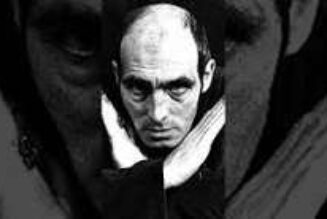
The Way of the Solitary Pagan Witch
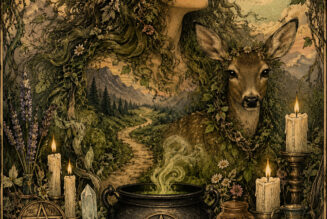
Witchcraft is sometimes described as the Crooked Path.
For the solitary Pagan Witch, this is a particularly fitting name. A crooked path does not run neatly between fences. It does not necessarily follow the road everyone else has chosen, nor does it require a priest, priestess, coven, teacher or organisation to tell the traveller where to go.
It twists. It turns. Sometimes it disappears beneath the undergrowth altogether.
And yet it remains a path.
For the solitary Witch, the Crooked Path can represent independence, personal experience, curiosity and the willingness to explore spiritual life for yourself.
The Witch as Outsider
The image of the Witch has long been associated with the outsider.
Historically, however, we should be careful about imagining everyone accused of witchcraft as secretly practising the Pagan Witchcraft we know today. Most people prosecuted for witchcraft in Europe were ordinary Christians accused by other Christians of causing harm through supernatural means.
Nevertheless, the history of witch persecution has contributed greatly to the modern image of the Witch as someone who stands beyond respectable society.
Women formed the majority of those prosecuted in many European witch trials. Poverty, age, reputation, social conflict and gender could all play their part in making someone vulnerable to accusation.
The Witch therefore became associated with someone society mistrusted: the difficult woman, the independent woman, the healer, the outsider, the person who did not quite fit comfortably into the expected order.
For some modern solitary Witches, reclaiming the word Witch is therefore an act of independence.
It says:
I am prepared to walk my own path.
Remembering the Witch Trials
The European witch trials were a terrible historical reality, but they have also gathered myths around them.
Modern historians generally estimate that somewhere around 40,000–60,000 people were executed for witchcraft in Europe, with women making up roughly three-quarters of those accused or executed overall, though the proportions varied greatly between regions.
The phrase “the Burning Times” became popular among modern Pagans and Witches as a way of remembering these persecutions. Historically, however, not everyone accused of witchcraft was burned. Execution methods varied considerably from country to country.
For the solitary Pagan Witch, remembering this history need not mean creating myths about it.
The real history is powerful enough.
Thousands of people suffered because communities became frightened of supposed supernatural enemies and legal and religious authorities sometimes turned those fears into persecution.
That alone deserves remembering.
The Malleus Maleficarum
One notorious work associated with European witch persecution was the Malleus Maleficarum — The Hammer of Witches — published in 1486–87 and principally associated with the Dominican inquisitor Heinrich Kramer.
Its pages contain deeply misogynistic arguments about women, sexuality and supposed susceptibility to witchcraft.
The book reflected and reinforced ideas already circulating within parts of medieval European society: that women were supposedly weaker, more easily tempted and particularly vulnerable to the Devil.
Such beliefs helped create an intellectual framework in which accusations against women could appear reasonable to those who accepted them.
The Malleus became influential, though it was never simply a universal rulebook followed by every church court or witch trial.
For today’s Witch, its importance lies partly in showing how fear, religious prejudice, misogyny and superstition could be dressed up as respectable authority.
Women, Healing and Traditional Knowledge
There is another romantic image we should approach carefully: the idea that most women accused of witchcraft were herbalists, midwives or Pagan healers.
Historical evidence does not support such a simple explanation.
Nevertheless, women unquestionably possessed and transmitted enormous amounts of practical knowledge concerning childbirth, household medicine, plants, food, farming and the care of families and communities.
Much of this knowledge was passed directly from person to person rather than preserved in grand books.
That principle remains valuable to the solitary Witch.
Knowledge does not become worthless simply because it was not learned within an official organisation.
Your teachers may include books, experienced practitioners, folklore, history, nature and your own carefully considered experience.
The important thing is to remain curious while learning to distinguish tradition, personal experience, folklore and historical fact.
Walking Without a Coven
For the solitary Pagan Witch, perhaps the greatest lesson of the Crooked Path is that you do not require an organisation to give you permission to practise.
You may learn from others without surrendering your independence.
You may read about established traditions without joining them.
You may honour gods, goddesses, ancestors or spirits — or centre your practice entirely upon nature and the turning seasons.
You may practise divination, meditation, spellcraft, herbal lore, spirit work or simple seasonal observance.
Your path does not have to look like somebody else’s.
There need be no High Priestess.
No High Priest.
No degrees.
No initiation certificate.
No governing body.
No spiritual examination.
The solitary Witch accepts something both liberating and demanding:
You are responsible for your own path.
The Wisdom of the Elder
Modern Witchcraft has also reclaimed the image of the Crone.
In popular stories, the old woman was often transformed into something frightening: bent, ugly, suspicious and dangerous.
Yet old age can represent something entirely different — experience.
The elder has lived.
She has loved, lost, succeeded, failed, learned and survived.
For the solitary Witch, the Crone can therefore represent accumulated wisdom rather than decay.
Various Pagan practitioners find inspiration in powerful divine or folkloric female figures associated with wisdom, wilderness, magic, death or transformation, including Hecate, Ceridwen, Baba Yaga and the Cailleach.
They come from very different cultures and should not simply be treated as interchangeable versions of the same goddess. Each deserves to be understood within her own history and traditions.
But collectively they remind us that female spiritual power does not have to be young, beautiful, obedient or agreeable.
Witchcraft Is Something You Experience
Perhaps the simplest way to understand the Crooked Path is through the difference between being given an answer and discovering an answer.
Imagine making a cup of tea.
One method says:
Put the teabag in the mug. Add boiling water. Wait. Remove the bag. Add milk.
Finished.
The Witch is more likely to watch what happens.
How strong is it?
Has it brewed long enough?
What happened last time?
What happens if it is left another minute?
Does it actually taste good?
The example may be amusing, but it contains an important principle.
The solitary Witch learns through experience.
You can read fifty books about meditation, but eventually you must sit quietly.
You can study hundreds of pages about divination, but eventually you must shuffle the cards.
You can read about plants, but eventually you must recognise them growing outside — while learning proper safety before using them.
You can read about ritual, but eventually you must stand beneath the Moon and discover what ritual means to you.
Books provide maps.
Other Witches provide advice.
History provides lessons.
Tradition provides foundations.
But none of them can walk your path for you.
Your Crooked Path
This is why solitary Witchcraft should not simply mean practising conventional Witchcraft alone.
It can mean something much deeper.
It means accepting responsibility for discovering what your Witchcraft actually is.
Take what you learn seriously, but question it.
Respect tradition without becoming imprisoned by it.
Learn from experienced people without turning them into gurus.
Study history while recognising the difference between historical fact and modern Pagan mythology.
Experiment carefully.
Keep records.
Notice what works.
Discard what does not.
Allow your practice to change as you change.
There may be many people walking broadly in the same direction, but nobody has walked precisely your path before.
That is why it is crooked.
There is no perfectly straight road laid down ahead of you.
Sometimes you will wander. Sometimes you will make mistakes. Sometimes something you believed for years will suddenly stop making sense.
That is not necessarily failure.
That is learning.
The solitary Pagan Witch does not need to reach the end of the Crooked Path, because perhaps there isn’t an end.
The purpose is to walk it consciously.
Learn from those who walked before you. Respect those walking beside you. Leave something useful for those who will come afterwards.
But keep your feet upon your own path.
Your Witchcraft is not something another person can hand to you.
It is something you discover, experience and gradually make your own.