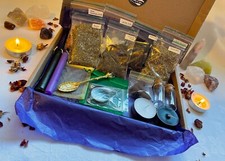
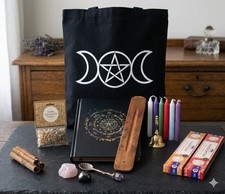
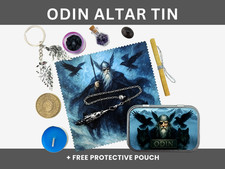
As you begin your journey into witchcraft, remember that the true foundation of magic is not found in physical objects, but in your own intent, energy, and spiritual connection. While tools, herbs, candles, and crystals are often used in the craft, they are secondary. The most effective magic comes from within—through your focused will, clear mind, and the guidance of any deities or spirits you choose to work with.
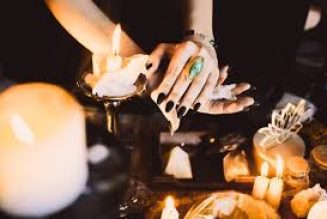
However, physical items can be helpful. They focus your intent, create a sacred space, and act as symbols that strengthen your connection to the energies you wish to work with. For many practitioners, collecting and using these tools becomes a meaningful ritual, deepening their spiritual practice and making their spells and ceremonies more effective.
Let’s look at the traditional tools you might find on a pagan witch’s altar, and explore their history, symbolism, and practical uses.
The Athame is a ritual knife, usually double-edged with a black handle. It is not used for cutting physical objects, but for directing and channeling magical energy. The black handle is believed to absorb and contain energy, making it ideal for ritual work. An athame can be made from many materials—wood, stone, horn, or metal. Even a letter opener or pocketknife can serve, as long as it is dedicated to magical use. What matters most is your intent and visualization, which turn an ordinary object into a powerful tool.
The Bell is another important altar tool. Its clear sound is used to purify the space, call spirits, or mark transitions during rituals. Bells can be made from brass, ceramic, crystal, or silver, and come in many sizes. In some traditions, the bell invites the presence of the Faerie Folk or signals the start and end of a ceremony. The sound helps clear negative energies and creates a harmonious environment for magic.
The Boline is a practical knife, often with a white handle, used for harvesting herbs, inscribing candles, or cutting cords. Any knife set aside for magical work can be a boline. Using the boline to gather herbs or prepare ritual items is a sacred act, connecting you to nature and the spirits of the plants.
Bowls are common on the altar, each with a specific purpose. One may hold salt for purification and the element of earth; another may contain water for emotional cleansing and the element of water; a third may be used for libations—offerings to deities, spirits, or ancestors. These simple vessels become sacred through their use and intention.
The Broom, or Besom, is a symbol of cleansing and protection. Unlike regular brooms, the ritual besom is used to sweep away negative energy and prepare the ritual space. It is often used in circle casting, marking the boundaries of a protected, sacred area. The besom also represents fertility and the threshold between worlds.
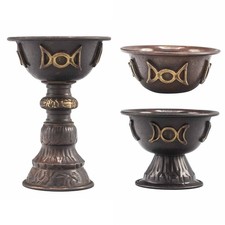
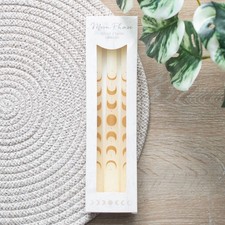
Candle Holders are needed for safely burning candles during rituals. Candles represent the element of fire and are used to honor deities, mark the quarters, or focus magical intent. Ideally, have separate holders for the Goddess, God, and any working candles. The style of holder can add personal meaning to your altar.
The Cauldron is a symbol of the Goddess, transformation, and rebirth. Traditionally made of cast iron or metal, it is used for mixing potions, burning offerings, or scrying with water. If you burn candles or incense inside, line the bottom with sand to prevent overheating. Any fireproof pot can serve as a cauldron if treated with respect.
The Censer is used for burning incense, which purifies the space, invokes spirits, or carries prayers. Censers can be made from brass, shells, wood, or other heat-resistant materials. Sand in the base helps stabilize burning charcoal or incense. The rising smoke is seen as a bridge between the physical and spiritual worlds.
The Cingulum is a cord, usually nine feet long and made of red silk, wool, or cotton. It is knotted at initiation and worn with the ritual robe, kept on the altar, or wrapped around a staff. The cingulum represents the bond between the witch and their tradition, as well as the flow of magical energy. Its length and color may vary.
The Crystal Ball is used for divination and scrying. Ideally, it is a clear quartz sphere, but lead crystal also works. The ball’s smooth surface helps with visions and psychic insight, while natural inclusions can serve as focal points for meditation. The crystal ball symbolizes clarity, intuition, and the mysteries of the unseen.
The Chalice holds ritual beverages, such as wine or juice, during ceremonies. It can be made of pottery, silver, brass, crystal, or wood. The chalice represents the element of water, the feminine principle, and the sharing of blessings. It is often paired with the athame in symbolic acts of union and creation.
The Incense Burner holds incense sticks, cones, or resins. It may be made from wood, ceramic, glass, brass, or shells. The type of incense and burner can be chosen to match the ritual’s intention, such as purification, attraction, or spiritual elevation.
The Pentacle is a flat disk with a five-pointed star inside a circle, representing the elements and unity of spirit. It is used to consecrate tools, bless objects, or as a focus for meditation. The pentacle can be made from wood, ceramic, clay, wax, metal, or even drawn on paper. It anchors the energies of the ritual and serves as a protective symbol.
The Plate is used to hold bread or other foods blessed during rituals. This simple item becomes sacred through its role in sharing nourishment and gratitude with the divine and the community.
Robes are traditional garments worn during rituals to separate sacred time from everyday life. The color and style may vary by ritual, personal preference, or tradition. White and black are common, symbolizing purity and mystery. The cingulum may be used to tie the robe at the waist, marking the transition into ritual space.
The Staff is a long wand, often decorated, used to direct energy, mark boundaries, or serve as a walking stick for outdoor rituals. It symbolizes authority and connection to the earth, and may be carved or adorned with crystals, feathers, or ribbons.
Tarot Cards are a popular tool for divination, self-reflection, and spiritual guidance. Choose a deck that resonates with you, as the imagery will shape your intuitive connection. Over time, you may collect several decks, each offering unique insights.
The Wand is a classic tool of the witch. Traditionally, it is about 12 to 16 inches long and made from woods like oak, willow, hazel, apple, or elder. Each wood has its own magical associations. Many practitioners prefer to harvest their wand from nature, but a purchased wand can be just as effective if chosen with care. The wand is used to direct energy, cast circles, and invoke spirits, representing the creative force of the practitioner.
In summary, the tools of witchcraft are rich in symbolism and tradition, but their true power comes from the meaning and intent you bring to them. As you build your altar and gather your tools, remember that your personal connection, creativity, and respect for the craft are what make your magic truly effective and meaningful.