Throughout history, cats have been closely linked to the supernatural.
They are often seen as symbols of both good and bad luck, and have been associated with healing as well as harm.
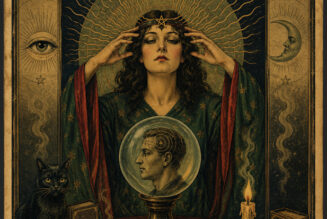
In many folk traditions, cats are considered favored companions of witches, sorcerers, and fortune-tellers.
Numerous superstitions about cats exist across cultures.
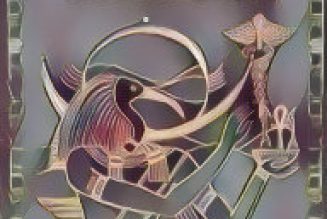
In ancient Egypt, cats were regarded as sacred animals, connected to the Moon and the goddess Bast, who represented marriage.
Cats were also linked to the Mother Goddess, Isis.
Egyptian art sometimes depicted the sun god Ra as a cat defeating the Serpent of Darkness.
Black cats, in particular, became associated with darkness and death. Folklore often claimed that nearly every witch, sorcerer, or fortune-teller kept a cat, and sometimes an owl or a toad as well.
During the witch hunts, cats were believed to be familiars—creatures thought to embody demons and carry out harmful acts on behalf of witches.
For example, Elizabeth Francis of Chelmsford, England, who was convicted of witchcraft in 1556, claimed to keep a white-spotted cat named Sathan. She said the cat would perform tasks for her in exchange for a drop of her blood. Witches were also believed to be able to transform into cats nine times, reflecting the idea that cats have nine lives.
Some legends even described black cats as the Devil in disguise.
In medieval Europe, black cats were frequently hunted and burned, especially on Shrove Tuesday and Easter.
Cats accused of being witches’ familiars were often killed by being burned alive.
Cats also appeared in accounts of witchcraft rituals. During the trial of John Fian, a well-known Scottish witch in 1590–91, Fian and his coven were accused of attempting to drown King James VI and Queen Anne by performing a ritual involving a cat and a human corpse, which they cast into the sea while reciting incantations.
According to the story, a great storm arose and forced the royal ship to return to Scotland, though the king and queen were unharmed.
In Scottish Highland folklore, a large breed of wild cats known as Elfin Cats were believed to be witches in disguise.
These Elfin Cats were described as being the size of dogs, black with a white spot on the chest, with arched backs and bristling fur—resembling the classic Halloween cat.
While black cats are often linked to witchcraft, in some regions of Europe, England, and the United States, owning a black cat is considered good luck.
However, it is still widely believed that having a black cat cross your path brings bad luck. In other traditions, if a cat jumps over a corpse, the corpse is said to become a vampire.
To prevent this, folklore sometimes called for the cat to be killed. Cats have also been used as fertility charms; for example, burying a cat in a field was thought to ensure a good harvest.
In the southern United States, cats play a role in Vodun practices.
Charms made from cats, especially their whiskers, were believed to bring misfortune, illness, or even death to others.
On the other hand, cats have also been credited with healing properties in folklore. A broth made from a black cat was once thought to cure consumption.
In the 17th century, boiling a whole cat in oil was believed to produce a remedy for wounds.
Some traditions held that illnesses could be transferred to cats, which were then driven away from the home. Cats’ eyes were also believed to have the ability to see ghosts.
In western Asia, a stone known as the Cat’s Eye, which is dull red with a white mark, is associated with trouble and evil.
In witchcraft, the cat remains a valued companion or familiar, appreciated for its psychic sensitivity and its assistance in magical practices and rituals.