In astrology, symbols called glyphs are used to represent complex ideas in a simple way. For example, a circle often stands for spirit—wholeness, unity, and the infinite. A semicircle, on the other hand, is seen as a symbol of the soul, which receives and transforms experiences.
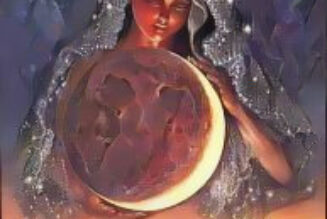
The Moon’s glyph is a crescent shape. This symbol is important because it represents the journey of the soul. The crescent acts as both a container and a channel, holding our inner world and reflecting the Sun’s light. Unlike many other astrological symbols, the Moon’s glyph closely matches how the Moon actually looks in the sky, especially when it is waxing or waning.
The two points of the crescent are formed where semicircles meet. These points remind us of the Moon’s changing phases—waxing, waning, and the ongoing movement between light and shadow. The horns of the crescent can also stand for duality, such as presence and absence, day and night, or growth and decline. Even though these are opposites, the curve of the crescent brings them together, suggesting a return to wholeness.
In astrology, the Moon is thought of as the vessel of life. It stores images, emotions, and memories that shape our experiences. The Moon is linked to instinct—those immediate feelings and reactions that come before we think about them. It is the part of us that feels, remembers, and responds on a deep, intuitive level.
The Moon also affects how we remember and make sense of our lives. When we look back, we do not recall events as a simple list. Instead, the Moon helps us turn our experiences into a story, with plots and chapters that give meaning to our journey.
The Moon’s position in a specific astrological Sign and House adds more detail to this story. It influences the style and tone of our emotional responses, habits, and the ways we seek comfort. For instance, someone with the Moon in Cancer may show care and protection, while a Moon in Aquarius might look for emotional fulfillment through new ideas and community.
Symbolically, the Moon is sometimes seen as a reflection of the Sun’s powers. The Sun stands for conscious will and identity, while the Moon is linked to the unconscious and subconscious—the hidden parts of the mind where dreams, instincts, and ancestral memories live. In this way, the Moon connects what is seen and unseen, known and mysterious.
In magick, the Moon is closely tied to the astral plane, which is called Yesod in the Kabbalistic Tree of Life. Yesod is the realm just before things become physical, where spiritual energies start to take shape. Many magickal practices are done in this sphere, as it is where intentions begin to move toward reality.
The Moon’s role as a collector and distributor of influences is important in magick. It gathers energies from the universe and sends them to Earth, creating the ebb and flow of life’s tides. This includes both the movement of the oceans and the rhythms of emotion, intuition, and psychic awareness.
In summary, the Moon in astrology is much more than just a planet or a symbol. It stands for the journey of the soul, the keeper of memories, the source of instinct, and the creator of the stories that shape our lives. Its influence can be felt in every cycle, every emotion, and every act of magick that connects the spiritual and physical worlds.