Across many cultures and throughout history, the Moon has been regarded as a symbol of transformation, intuition, and the cycles of life. Numerous deities are associated with the Moon, each representing distinct qualities of lunar energy. These deities are often honored in rituals for growth, the removal of negativity, fertility, intuition, magick, and the enhancement of dreams.
Arianrhod is a significant figure in Welsh mythology, recognized as the goddess of the full moon, time, karma, and destiny. Her name, meaning “Silver Wheel,” refers to the continuous cycles of the Moon and fate. As the daughter of the goddess Dôn, Arianrhod is depicted as a powerful and enigmatic presence, overseeing the journey of souls and the unfolding of destiny.
According to legend, Arianrhod rules over Caer Feddwidd, the Fort of Carousa, a mystical realm within the Celtic Otherworld. This enchanted place is described as a land of eternal youth, where a magical fountain of wine grants everlasting health and vitality. In this role, Arianrhod is seen as a guardian of the soul’s journey, guiding individuals through cycles of renewal and transformation.
Within witchcraft, Arianrhod is a source of inspiration, renewal, and rejuvenation. She is frequently invoked in rituals that draw upon the full moon’s power for healing, spiritual growth, and the realization of one’s potential. Her association with time and fate makes her especially meaningful for those seeking to understand or influence the patterns of their lives.
Diana, the Roman goddess, is closely linked to the Moon in all its phases. As the counterpart of the Greek goddess Artemis, Diana is revered as a goddess of fertility, love, and the wild. She is often portrayed as a huntress, carrying a bow and accompanied by woodland animals, symbolizing her deep connection to nature and the untamed world.
Beyond her role as a virgin goddess and protector of women, Diana is also honored as an Earth goddess, embodying nurturing and life-giving qualities. She is especially venerated by women seeking protection during childbirth and by those wishing to connect with the cycles of fertility and growth.
Diana’s beauty and hunting skills have made her a symbol of the pursuit of love, particularly love that is distant or difficult to attain. Her association with the Moon’s changing phases reflects the ebb and flow of desire, making her a powerful figure in rituals focused on attracting or strengthening romantic connections.
In Slavic mythology, Myesyats personifies the Moon and is notable for being a male lunar deity. He represents the three stages of life: youth, maturity, and old age. Myesyats is first honored as a young man at the new moon, reaches maturity at the full moon, and then ages and dies as the moon wanes, only to be reborn with the new moon after three days.
This cyclical journey reflects the natural rhythms of life, death, and rebirth, making Myesyats a symbol of renewal and restored health. Traditionally, parents would pray to him for the protection of their children and for harmony and healing within the family.
Some traditions also mention a female counterpart, Myesytsa, a Moon maiden who is the consort of Dazhbog, the Sun God, and the mother of the stars. This duality illustrates the Moon’s ability to embody both masculine and feminine energies, offering a sense of balance and unity in the cosmos.
Myesyats is especially honored in rituals for healing, family harmony, and the resolution of sorrow. His presence is called upon to bring comfort and to guide individuals through periods of change and transition.
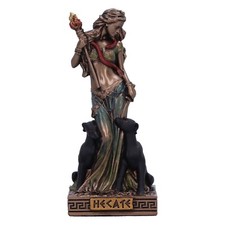
Selene, the Greek goddess, is most closely associated with the full moon. She is sometimes considered part of a lunar trinity with Diana and Hecate, representing the Moon’s different phases and powers. Selene is the twin sister of Helios, the Sun God, and is often depicted riding a chariot drawn by white horses across the night sky.
In myth, Selene rises from the sea each night, her radiant light illuminating the world. She symbolizes beauty, mystery, and the gentle power of the full moon. Selene is especially invoked by those seeking fertility, as well as by individuals wishing to enhance intuition, creativity, and spiritual insight.
During the full moon, Selene’s energy is believed to be at its strongest, making this an ideal time for rituals of manifestation, divination, and personal transformation. Her presence is thought to offer guidance and inspiration to anyone seeking a deeper connection with the mysteries of the lunar cycle.