Deep within the Appalachian Mountains developed a rich collection of folk beliefs, healing practices, charms, divination methods and supernatural traditions. Today, these practices are sometimes described under names such as Appalachian folk magic, Granny Magic, mountain magic, or occasionally Appalachian witchcraft.
For a modern Pagan Witch, there is much about these traditions that may feel familiar. They involve herbs, signs from nature, household charms, dreams, divination, healing practices, spirits and a close relationship with the land.
However, Appalachian folk magic was never a single organised religion or Witchcraft tradition with one set of rules. It developed gradually among communities scattered throughout a vast mountainous region.
Many European settlers who moved into Appalachia during the eighteenth and nineteenth centuries brought their own folklore with them. Scottish, Irish, English, German and other European traditions all contributed to the mixture.
Settlers brought beliefs concerning protective charms, supernatural creatures, omens, herbal remedies, divination and the power of certain words, prayers and objects.
These beliefs did not simply remain unchanged.
Life in Appalachia created something new.
Mountain communities were often isolated, and people had to rely heavily upon their families, neighbours and the natural world around them. Knowledge about plants, weather, animals, childbirth, farming and healing could be extremely valuable.
Traditions were commonly passed orally from one generation to another.
A grandmother might teach her daughter which plants had traditionally been used for particular purposes. Someone might learn how to dowse for water from an older relative. Another person might inherit a family charm, prayer or method of interpreting dreams.
This is one reason the word “granny” became associated with Appalachian folk traditions.
The image is not necessarily that of a stereotypical Witch standing over a cauldron. Instead, imagine an older woman living in a mountain community who possessed knowledge accumulated through years of experience.
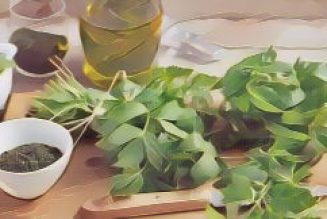
She might know herbs.
She might assist during childbirth.
She might understand local weather signs.
She might know traditional prayers and charms.
And she might be the person neighbours visited when ordinary explanations seemed insufficient.
For a modern Pagan Witch, this offers an important lesson.
Magic does not necessarily require elaborate temples, expensive tools or formal initiation. Folk magic often develops from ordinary life.
The kitchen can become a magical place.
The garden can supply magical ingredients.
A walking stick can become a dowsing rod.
A bowl of water can become a scrying surface.
A song can become an incantation.
And knowledge of the seasons can become part of one’s spiritual practice.
Appalachian folk magic reminds us that magic has often existed alongside everyday life rather than apart from it.
It was something practised around the hearth, garden, woodland, farm and family home.
For the solitary Pagan Witch, perhaps that is one of its most appealing qualities.
The magical and the ordinary need not be separate worlds.
Sometimes they are simply two ways of looking at the same landscape.