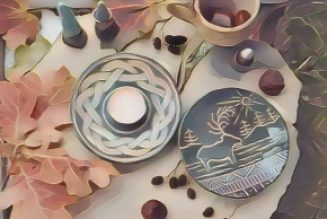
The Witch’s knot is a notable symbol in folk magic, recognized for its intricate and interwoven design.
This symbol first appeared during the Middle Ages, a time when belief in both the power and risks of witchcraft was widespread. The knot visually represents knot magic, a practice where cords or threads are tied with the intention to bind, protect, or release energy.
Most commonly, the Witch’s knot served as a protective charm. People would scratch, carve, or paint it above the doorways of homes, barns, and stables. The idea was that the knot’s complex, unbroken lines could confuse or repel harmful forces, keeping them from entering. This belief was based on the notion that evil spirits or negative magic could be trapped or diverted by the endless loops of the knot.
The Witch’s knot also carries symbolic meaning. Its continuous, interlaced pattern is thought to represent the interconnectedness of all things and the cyclical nature of life and magic. Drawing the knot in one unbroken motion was considered important, as it was believed to strengthen the charm and keep its protective energy intact.
Beyond its use as a ward, the Witch’s knot sometimes appeared in amulets, talismans, and ritual tools. Its presence served as a reminder of the practitioner’s intent and the lasting strength of folk traditions. Today, the Witch’s knot remains a symbol of protection, resilience, and the enduring legacy of magical practice.