Throughout history, early societies made significant discoveries that improved their survival, such as increasing crop and animal yields. However, the Moon also began to reveal its own mysteries. One of the most notable was its apparent ability to predict the weather. For people who lived before the development of scientific theory, this connection between the Moon and weather patterns likely seemed extraordinary—perhaps even magical.
Although it is challenging to distinguish exactly what ancient civilizations understood about lunar weather prediction compared to later knowledge, it is clear that the Moon has long served as a valuable tool for forecasting weather. This remains true even today. For example, it is well established that tornadoes and hurricanes are more frequent during the New and Full Moon phases. Additionally, rainfall tends to increase during the Moon’s first quarter and the first week of the Waning Moon.
If you are interested in weather prediction, observing the Moon and the symbols associated with it can be a useful practice. With careful observation and some experience, it is possible to develop skills that rival those of modern meteorologists. The following traditional Moon adages offer a starting point for understanding these patterns:
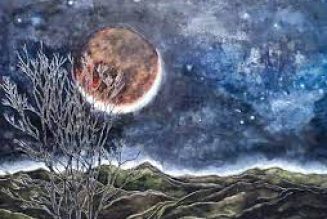
- A pale Moon often signals rain, a red Moon suggests wind, and a white Moon indicates neither rain nor snow.
- When the Full Moon’s shadow fills the Crescent, fair weather is expected for everyone.
- If a circle appears around the Moon, it is likely that snow or rain will follow soon.
- A ring around the New Moon can be a sign of potential disasters at sea.
- If a red Moon rises with large clouds nearby, rain is likely within half a day.
- If October’s Full Moon brings no frost, frost is unlikely until the next Full Moon.
- The closer the New Moon is to Christmas Day, the longer the winter is expected to last.
When the Crescent Moon has sharp, pointed horns, strong winds are likely. If the horns appear blunt and dull, fair weather is expected to continue at least until the Full Moon.