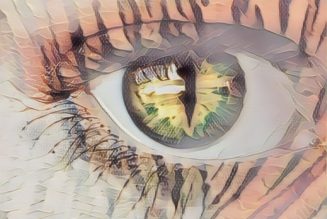
The idea of the Devil’s mark has been important in the history of witchcraft, especially in European folklore and legal cases. During the European witch hunts, which lasted from the late Middle Ages into the early modern era, many people believed that the Devil would leave a permanent mark on those who pledged loyalty to him.
People thought these marks could appear in different ways. Some accounts described the Devil scratching the skin or using a hot iron, leaving a blue or red mark that did not scar. Other stories said the mark came from the Devil’s lick, giving it a supernatural origin.
It was believed that this marking happened at the end of an initiation ritual, which was imagined to take place at secret nighttime gatherings called sabbats, where witches were thought to meet with the Devil and each other.
The location of the mark was considered important. It was said to be hidden in “secret places” on the body, such as under the eyelids, in the armpits, or inside other body cavities, making it hard to find without a thorough search.
Many believed that finding a Devil’s mark was the strongest proof of witchcraft. It was widely assumed that every witch or sorcerer had at least one, and this idea became central in witch trials across Europe.
When someone was accused of witchcraft, they were often searched for these marks. Any scar, birthmark, blemish, or even a spot of skin that did not bleed when pricked could be seen as evidence of a pact with the Devil.
Witch-hunters and so-called experts claimed they could tell the difference between a Devil’s mark and a normal skin feature. In reality, this was rarely clear, and many innocent people were accused because of natural marks.
Accused people often said their marks were natural, but these explanations were usually ignored. Confessions about Devil’s marks were often forced through torture, and the searches themselves were humiliating and painful.
Inquisitors would remove the accused’s clothing and shave off all body hair to check every part of the skin. They would then push pins into scars, calluses, or thick skin to see if the person felt pain, which was thought to show the Devil’s touch.
These searches were sometimes done in public, in front of crowds. The stress and fear could cause the accused not to feel the pinpricks, which was then used as more evidence against them.
Some believed the Devil could also leave invisible marks. If no visible mark was found, inquisitors would keep pricking the skin until they found a spot that seemed numb.
The idea of the Devil’s mark was more than just a legal tool. It reflected deep fears about evil and the possibility of secret connections to supernatural forces. Searching for these marks became a symbol of the wider anxiety about witchcraft and heresy.
In the early twentieth century, British anthropologist Margaret A. Murray suggested that Devil’s marks were actually tattoos or identification marks, possibly from an old pagan religion that survived into the Middle Ages. While her ideas were popular for a time, most modern scholars do not support them.
Even so, the meaning of Devil’s marks is still debated. Some people find value in Murray’s theories, while others disagree. This ongoing discussion shows how history, culture, and personal beliefs can shape our understanding of the past.
The term “Devil’s mark” was sometimes used interchangeably with “witch’s mark,” and the exact meaning could change depending on the region and context. Whether real or imagined, these marks had a strong influence on how witchcraft was seen for centuries.
Today, the story of the Devil’s mark reminds us of the dangers of superstition, the risks of fear-based justice, and the lasting interest in the mysteries of the occult.