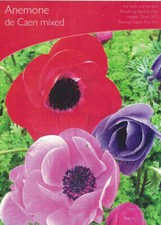
The Anemone, sometimes called the windflower, is a captivating perennial herbaceous plant belonging to the buttercup family, Ranunculaceae. Its botanical features are as enchanting as its folklore: deeply divided, soft green leaves with a slightly hairy texture, and slender, wiry stems that rise gracefully from a rhizomatous base. The flowers, which bloom in early spring or late summer depending on the species, are typically composed of five to eight silky, petal-like sepals in shades of white, pink, purple, blue, or red, surrounding a central cluster of bright yellow stamens. After flowering, the plant produces distinctive, fluffy seed heads that are easily dispersed by the wind, giving the Anemone its ethereal, fleeting quality.
Anemones thrive in a variety of habitats, from moist woodlands and shaded forest floors to rocky hillsides and alpine meadows. They prefer well-drained, humus-rich soils and often form carpets of color before the tree canopy fully leafs out in spring. In the wild, you might find them nestled among mossy stones, their blossoms catching the first rays of sunlight after a long winter, or lining the banks of a gentle stream, their roots anchored in the cool, rich earth.
The history of Anemone in human culture stretches back thousands of years. In ancient Greece, the Anemone was believed to have sprung from the tears of Aphrodite as she mourned the death of Adonis, her beloved. This myth imbued the flower with a sense of sorrow and longing, making it a symbol of love lost and the ephemeral nature of beauty and life. The Romans, too, revered the Anemone, using it in rituals to ward off fever and disease. In the Middle Ages, herbalists and wise women recognized the plant’s potent properties, but also its dangers—many species of Anemone contain toxic compounds, and their use in traditional medicine was always approached with caution and respect.
Folk remedies employed Anemone for a variety of ailments, including headaches, rheumatism, and menstrual issues. In some traditions, a poultice made from the leaves was applied to bruises or wounds to speed healing, while a tincture of the root was used—sparingly—to ease nervous tension. However, the plant’s toxicity meant that such remedies were reserved for those with deep knowledge of herbal lore, and Anemone was often regarded as a plant of both healing and warning.
In folklore, the Anemone is steeped in symbolism. Beyond its Greek origins, the flower was thought to bring luck and protection. In Victorian flower language, the Anemone represented anticipation and protection against evil, and it was often included in bouquets to convey a message of hope or to ward off misfortune. In some European countries, it was believed that the first Anemone of spring brought good fortune, while in others, the flower was associated with spirits and the otherworld, its brief bloom a reminder of the thin veil between worlds.
Magically, the Anemone is a plant of profound power and subtlety. It is most commonly associated with protection, healing, and the invocation of fair winds, but its magical uses extend far beyond these. The Anemone is believed to act as a shield against ill fortune and negative energies, making it a favored addition to protective charms and amulets. Placing fresh or dried Anemone flowers in the home is said to create a barrier against harmful influences and psychic attack, while carrying a petal or seed head in a pouch can serve as a personal talisman for safety and luck. Some practitioners will weave Anemone blossoms into wreaths to hang above doorways, inviting blessings and keeping negativity at bay.
In healing magic, Anemone is used to promote recovery from emotional wounds and to encourage renewal after periods of grief or hardship. Its ephemeral blossoms remind us of the cycles of life, death, and rebirth, making it a powerful ally in rituals of transformation and letting go. The plant’s association with the wind element also makes it ideal for spells that seek to bring change, inspiration, or clarity—simply meditating with an Anemone flower or placing it on an altar can help open the mind to new ideas and fresh perspectives. For those seeking to break old patterns or invite a fresh start, a ritual bath with Anemone petals, or burning the dried flowers as incense, can help clear stagnant energy and invite the winds of change.
Some practitioners use Anemone in dreamwork, placing the flowers beneath a pillow to ward off nightmares and invite prophetic dreams. In rituals, Anemone petals may be scattered to consecrate sacred space, or woven into wreaths to honor deities of love, protection, and the natural world. The Anemone’s fleeting beauty is a reminder to embrace the present moment, trust in the cycles of nature, and allow magic to flow freely through our lives. In spring, gathering the first Anemone blooms can be a sacred act, a way to honor the return of light and the promise of renewal. Whether used in spellwork, carried as a charm, or simply admired for its delicate beauty, the Anemone invites us to connect with the mysteries of the natural world and the subtle currents of magic that move through all things.