One of the great advantages of being a solitary Pagan Witch is that your spiritual practice belongs to you. You do not have to follow the timetable of a coven, attend regular meetings, or practise Witchcraft at particular times simply because somebody else says you should.
However, that freedom can sometimes create its own difficulty. When nobody is expecting you to turn up, it can be surprisingly easy to put your spiritual practice aside.
The answer is not to create more rules. It is to make your practice a natural part of everyday life.
Start Small
A daily Pagan or Witchcraft practice does not need to involve an elaborate ritual.
You do not have to cast a circle, light half a dozen candles, perform spellwork or spend an hour meditating every morning. Five or ten quiet minutes can be enough.
Choose a time that naturally fits into your life. It might be when you first wake up, during a lunch break, after work or just before going to bed.
The important thing is that the time works for you.
Choose Something Meaningful
Your daily practice should contain something you actually enjoy or find spiritually useful.
You might:
- Pull one tarot or oracle card.
- Sit quietly in meditation.
- Light a candle and reflect upon the day.
- Spend a few minutes outside connecting with nature.
- Write in your Book of Shadows or journal.
- Tend herbs, plants or your witch’s garden.
- Speak to a deity, ancestor or spirit you honour.
- Observe the Moon, weather or changing seasons.
- Practise a little divination.
- Simply sit quietly at your altar.
There is no requirement to do the same thing every day.
Create Your Own Sacred Space
If possible, keep a small area ready for your practice.
It does not need to look impressive. A small table, shelf, windowsill or quiet corner can become your personal altar or sacred space.
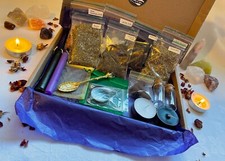
Keep the things you regularly use nearby—perhaps candles, cards, herbs, stones, incense, a journal or other objects that have meaning to you.
Having everything ready removes the effort of constantly setting things up and putting them away.
For a solitary practitioner, this little space can become somewhere that is entirely your own.
Allow Your Practice to Change
Consistency does not mean rigidity.
There may be mornings when meditation feels right and evenings when you would rather pull a tarot card. Sometimes you may want to perform spellwork; on another day, walking beneath the trees may be all the spiritual practice you need.
Your circumstances will change. Your energy will change. Your interests will change.
Allow your Witchcraft to change with you.
A solitary path should have enough freedom to grow alongside the person walking it.
Don’t Punish Yourself for Missing Days
Perhaps the most important rule is this:
Don’t turn your spiritual practice into another chore.
If you miss a day, nothing terrible has happened.
If you miss a week, begin again when you are ready.
There is no spiritual attendance register. Nobody is handing out certificates for perfect Witchcraft, and you do not become less of a Pagan because everyday life occasionally gets in the way.
The purpose of a daily practice is to strengthen your connection with your craft, nature, spirituality and yourself—not to give you something else to feel guilty about.
Your Path, Your Pace
Being a solitary Pagan Witch means learning to trust yourself.
Some days your practice might last an hour. Other days it might consist of standing at the back door for two minutes, looking at the Moon and acknowledging that you are part of the natural world.
Both can have value.
Start small. Remain flexible. Follow what has meaning for you.
Most importantly, remember that there is no perfect way to be a solitary Pagan Witch.
It is your path. Walk it at your own pace.