One of the greatest advantages of being a Solitary Pagan Witch is having the freedom to discover your own path. However, that freedom can sometimes feel rather overwhelming.
Where do you begin?
Paganism and Witchcraft are enormous subjects. There are countless traditions, beliefs, magical practices, books, websites and opinions. One person tells you to begin with meditation, another recommends tarot, somebody else suggests herbs, while another insists that you must learn about the Moon, the elements or particular deities.
The simple answer is this: you don’t have to know yet.
Start by Exploring
If you have managed to find only fifteen minutes for your spiritual practice, there is nothing wrong with using those fifteen minutes simply to explore.
In fact, figuring out what interests you can become part of your practice.
Read a few pages of a Pagan or Witchcraft book. Research the history of a subject that interests you. Sit quietly in the garden and think about what Paganism means to you. Watch the Moon. Learn about a particular plant. Pull a tarot card and consider its meaning.
You don’t necessarily have to perform a spell or elaborate ritual for that time to count.
You are learning.
Keep a Solitary Witch’s Journal
A journal can be particularly useful when finding your direction.
Ask yourself simple questions:
What originally attracted me to Paganism or Witchcraft?
Do I feel particularly connected with nature?
Am I interested in spellcraft?
Would I like to explore herbs, divination, spirits, ancestors, folklore or deities?
Do I want my Witchcraft to be magical, spiritual, practical—or a mixture of all three?
Write down whatever comes to mind. There are no marks awarded and nobody else needs to read it.
Over time, patterns may begin to appear.
Give Yourself Permission to Wander
You may spend several weeks studying tarot before deciding it isn’t for you. You might become fascinated by crystals and later discover that herbs and plants feel much more natural.
That’s fine.
Exploration isn’t wasted time.
A Solitary Pagan Witch doesn’t have to follow somebody else’s syllabus or complete a set of prescribed stages. Your path can develop naturally through experience.
Allow yourself a few weeks—or even several months—to get the lay of the land.
You Don’t Need to Know Everything
Perhaps the most important lesson is accepting that Witchcraft is simply too large a subject to learn everything.
Nobody knows it all.
Choose one small subject that genuinely interests you and explore it. When you’re ready, move on to something else or dig deeper.
Your first goal doesn’t have to be casting the perfect spell, performing an impressive ritual or becoming an expert Witch.
Your first goal can simply be:
“I’m going to discover what kind of Pagan Witch I want to be.”
For the solitary practitioner, that discovery isn’t something standing in the way of the journey.
It is the beginning of the journey.










Being a Solitary Pagan Witch does not mean that you have to discover everything entirely by yourself. Solitary practice is about independence, freedom and developing a spiritual path that belongs to you. It does not mean shutting yourself away from the knowledge and experiences of others.
There is an enormous amount we can learn from people who have walked similar paths before us.
Listen, Read and Explore
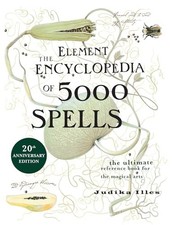
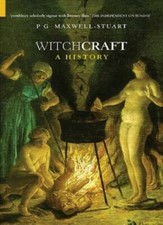
Books, articles, podcasts, videos and conversations with other Pagans and Witches can introduce you to ideas you may never have considered. Experienced practitioners can share what has worked for them, what has failed and what they have learned along the way.
You don’t have to copy their practices.
Think of other people’s knowledge as a collection of possibilities rather than a set of instructions. Take what interests you, investigate it further and decide whether it has a place within your own practice.
A Solitary Witch can learn from many people without becoming a follower of any of them.
Don’t Be Afraid to Ask Questions
Nobody begins their Pagan or Witchcraft journey knowing everything. In fact, even someone who has practised for decades will still encounter new ideas and questions.
If something confuses you, ask.
You might wonder how somebody performs a particular spell, why they honour a certain deity, how they celebrate a seasonal festival or what they have learned from working with herbs, tarot, meditation or spirit.
Their answer doesn’t have to become your answer. It simply gives you another perspective to consider.
Learn from Experience
Some of the most valuable knowledge comes from ordinary practitioners talking about their experiences.
Someone may explain why a spell didn’t work as expected. Another person might describe how their understanding of a deity changed over many years. Someone else may explain why they abandoned a practice that once seemed important to them.
These experiences can be just as useful as success stories.
They remind us that Paganism and Witchcraft are living paths involving experimentation, mistakes, discovery and change.
Keep Your Independence
Learning from others should never mean surrendering control of your spiritual path.
Be cautious of anyone who insists there is only one correct way to practise Witchcraft or Paganism. Advice can be useful, but you are still responsible for deciding what you believe and practise.
Question what you are told. Research different viewpoints. Use your own judgement.
Even respected and experienced practitioners can be mistaken.
Walk Alone — But Never Stop Learning
Being solitary means that you choose your direction.
You can exchange ideas with other Witches, participate in Pagan communities, read traditional material and learn from experienced practitioners while still remaining completely independent.
Your greatest teacher, however, will often be experience itself.
Try things. Keep notes. Notice what works for you. Change what doesn’t. Allow your practice to develop naturally as you develop.
The Solitary Pagan Witch may walk an individual path, but countless people have walked similar roads before.
Listen to their stories. Learn from their experiences. Share your own when appropriate.
Then continue along your path, in your own way and at your own pace.