Dion Fortune (1890–1946) was one of the most influential figures in twentieth-century Western occultism. Although she was not a Pagan or a witch in the modern sense, her writings and teachings helped shape many of the ideas that later appeared in modern Paganism, Wicca, and witchcraft.
Born Violet Mary Firth in Wales, Fortune became an occultist, ceremonial magician, teacher, and author. She became involved with several important occult organisations connected with the Hermetic Order of the Golden Dawn tradition, including the Alpha et Omega.
She later founded her own organisation, the Fraternity of the Inner Light, now known as the Society of the Inner Light. Its purpose was to teach ceremonial magic, mysticism, spiritual development, and Western esoteric philosophy.
Fortune was particularly important because she presented complicated occult ideas in a way that ordinary readers could begin to understand. Rather than keeping esoteric teachings entirely within secretive magical organisations, her books introduced a much wider audience to subjects such as ritual magic, psychic protection, symbolism, mythology, the Qabalah, and spiritual development.
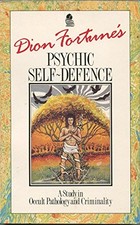
Among her best-known works are The Mystical Qabalah, Psychic Self-Defence, and the occult novel The Sea Priestess.
Her writings also explored the relationship between masculine and feminine spiritual forces. Fortune believed that both were important and that balance between them played a significant role in magical and spiritual development. Her treatment of feminine divinity and priestess symbolism would later appeal strongly to people involved in the developing Pagan and witchcraft movements.
Her novels were influential too. Rather than simply explaining occult ideas, Fortune placed magical and mystical concepts into stories. This allowed readers to imagine how ritual, spiritual forces, sacred landscapes, priesthood, and magical relationships might actually work in practice.
Fortune therefore became an important bridge between the ceremonial occultism of the nineteenth and early twentieth centuries and the Pagan and witchcraft revival that developed later in the twentieth century.
It is important, however, not to describe Dion Fortune as a founder of Wicca or modern Paganism. She was neither. Her own spiritual outlook remained strongly connected with Western esotericism and mystical Christianity.
Her importance lies instead in her influence.
Many of the subjects she wrote about—ritual magic, polarity, mythology, psychic protection, feminine divinity, symbolism, magical training, and personal spiritual experience—became familiar territory within later Pagan and witchcraft traditions.
Dion Fortune therefore occupies an interesting position in the history of modern Paganism and witchcraft.
She was not a modern Pagan or Wiccan, but some of the people who helped create those movements inherited a spiritual landscape that her writings had helped to shape.