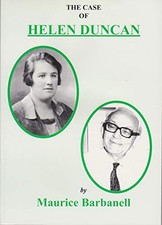
Helen Duncan was one of the most famous and controversial spiritualist mediums of the twentieth century. Born in Scotland in 1897, she became well known for claiming that she could communicate with the spirits of people who had died.
Spiritualism had become increasingly popular during the late nineteenth and early twentieth centuries, but interest grew enormously following the First World War. Millions of people had lost relatives and friends, and many grieving families desperately wanted to believe that death was not the end. Mediums claimed they could provide a link between the living and the dead.
Duncan became particularly famous because her séances were highly dramatic. She claimed that spirits could physically appear during them, sometimes through a mysterious substance known as ectoplasm.
Her supporters were convinced that she possessed genuine psychic abilities. However, sceptics and investigators accused her of fraud. Some claimed that her ectoplasm was actually made from ordinary materials, including cloth, paper and other substances that could easily be hidden and produced during a darkened séance.
Despite these accusations, Duncan continued to attract large audiences and remained popular with people who believed that her abilities were genuine.
Her most famous controversy occurred during the Second World War.
In 1941, during one of her séances, Duncan reportedly revealed information about the sinking of the British battleship HMS Barham. The ship had been sunk by a German U-boat, killing more than 800 men. The British government initially kept the sinking secret for military reasons.
Stories later developed that Duncan had somehow revealed the loss before it was publicly announced. This helped create the belief that the authorities considered her a possible security risk.
In January 1944, police raided one of Duncan’s séances in Portsmouth and arrested her. She was eventually prosecuted under the Witchcraft Act 1735.
Despite its name, the law was not really intended to prosecute genuine witchcraft. Instead, it targeted people who claimed to possess supernatural powers and used those claims to deceive others.
Duncan’s trial attracted considerable public attention. She was convicted and sentenced to nine months in prison.
Her case has often been described as the last major prosecution under Britain’s Witchcraft Act and became part of the continuing debate surrounding spiritualism, freedom of belief and the use of outdated laws.
The Witchcraft Act was finally repealed in 1951 and replaced by the Fraudulent Mediums Act, which dealt more directly with people pretending to possess spiritualistic or psychic abilities for financial gain.
Helen Duncan continued to practise as a medium after leaving prison. She died in 1956, aged 59.
Her reputation remains fiercely debated.
To her supporters, Helen Duncan was a genuine medium who was persecuted because the authorities feared abilities they could not understand. To her critics, she was a clever and theatrical performer whose séances relied upon deception.
Whatever the truth about her supernatural claims, Duncan became an extraordinary figure in British history. Her story sits at the crossroads of Spiritualism, war, law, belief and scepticism — which is perhaps why people are still discussing Helen Duncan more than seventy years after her death.