
Author: A Solitary Pagan
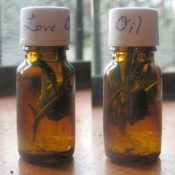

Attraction Love Oil
A hoodoo Attraction oil for drawing love. Blend equal parts of the following: • Rose scent, which can be one or more of these: • Essential Oil of Roses (Rose Otto) • Essential Oil of Rose Geranium • Rose Fragrance (synthetic) • Lavender oil • Vanilla oil • Sandalwood oil Touch to pulse points when in the presence of the one you want to attract.
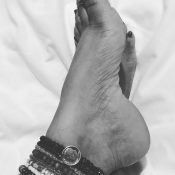

Foot Track Magic
Foot track magic is one of the hallmarks of hoodoo. It involves throwing powders and such in the path of a target, who will suffer from abnormal maladies and a run of bad luck once they have walked on it. The belief is that the toxic properties of the powder will be absorbed through the foot and “poison” the individual. Ailments such as back problems, difficulty walking, water retention, especiall...
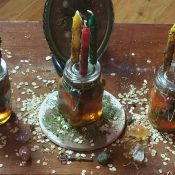

Crossing and Uncrossing
Simply put, crossing refers to spiritual works that cause harm or bad luck, while uncrossing refers to works that reverse it. There are a number of products sold that are used to aid in putting an end to crossed conditions, particularly when used in conjunction with one or more of the psalms. For example, products such as uncrossing crystals, oils, sachet powders, and incenses are believed to be p...
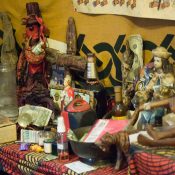

Voodoo is a Religion
Voodoo is a religion, while hoodoo is a magickal system. The word voodoo means the “spirit of God.” Voodoo believers accept the existence of one god, below which are the powerful spirits often referred to as Loa. These powerful spirits are responsible for daily matters in life in the areas of family, love, money, happiness, wealth, and revenge. Contrary to popular belief, however, Voodoo is first ...

New Orleans Voodoo
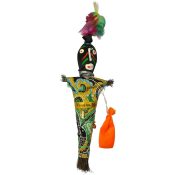
New Orleans Voodoo is known for several unique characteristics, such as Voodoo dolls, gris gris, and zombies. The use of Voodoo dolls in New Orleans reportedly peaked during the reign of the infamous Marie Laveau, the Voodoo Queen of New Orleans. Voodoo dolls are created as gris gris (pronounced gree gree), a form of talismanic magick. The word gris means grey, denoting that which lies between bla...


New Orleans Voodoo
also known as Creole Voodoo, originated from the ancestral religions of the African Diaspora, and is one of many incarnations of African-based religions rooted in the West African Dahomean Vodou tradition and the Central African traditions found in Haitian Vodou. It became syncretized with the Catholic religion as a result of the massive forced migrations and displacements of the slave trade. Slav...

Warlock
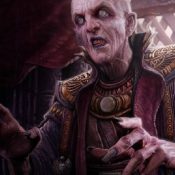
I left this one for last, as it is a word very rarely used in the Magickal community. This old term of insult comes from Old English waer-loga: “traitor” or “liar.” It once described a Witch who betrayed others to the Witch hunters, and it is often used erroneously by Mundanes to refer to male Witches. Today, some Wiccans may use the term for an initiated Witch who turns against the Craft.

Priest/Priestess
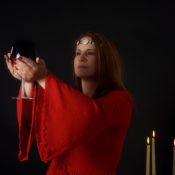
A man or woman dedicated to the service of the Gods—often concentrating on a single manifestation or aspect (such as a Priest of Apollo, or a Priestess of Aphrodite). They may also serve a community of worshippers. Priestly tasks can include maintenance of temples and altars, administering of sacraments, conducting and presiding over rites and rituals, pastoral counseling, etc. They may also serve...

Pagan
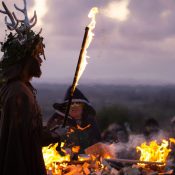
Paganism (meaning “of the country”) is a collection of diverse spiritual paths which are rooted in or inspired by indigenous (native) and Classical (ancient Egyptian, Greek, Roman, etc.) traditions worldwide. Paganism is often referred to as “The Old Religion” meaning preChristian. Pagans believe in the interconnectedness of all life, animism (everything is alive), pantheism (everything is Divine)...
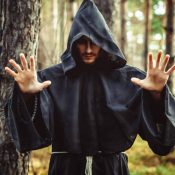

Witch
In Medieval Europe and Britain,“Cunning Women” were often called Wicce—an Anglo-Saxon word meaning “shaper”—from which we get our term “Witch.” This word, in turn, comes from Middle High German wicken (“to conjure”). Modern Witches include both men and women, and much of their magick is directed towards healing, of people and the Earth. Many Witches also practice divination and magickal techniques...
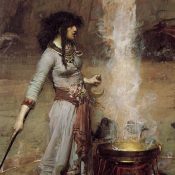

Cunning Man/Woman
“Cunning” comes from the Old Norse cunna (“to know”) and the Old English kenning (“wise”). This term was applied to the resident magicians and healers of small English towns and villages ever since the late Middle Ages. They were also called wise man or woman, Wizard, conjurer, sorcerer, charmer, blesser, peller (“expeller”), white Witch, and recently, hedge Witch. Like traditional tribal Shamans,...
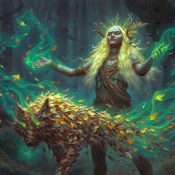

Shaman
The spiritual leaders in traditional tribal cultures are the Shamans, or medicine men and women, who are both gifted and learned in talents and skills of divination, herbalism, hypnosis, psychic work, and sorcery. In some places, these may be called “Witch Doctors.” They are the village teachers, magicians, spirit guides, healers, and midwives. In particular, the Shaman uses altered states of cons...