
Author: A Solitary Pagan


MAGE
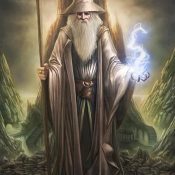
This term is often used as a synonym for “Wizard,” especially in a complimentary sense. A Mage may also be called a Magus, which means a master of the magickal arts. The ancient Magi (like the “Three Wise Men” in the Bible) were Zoroastrian Priests originating in Media and Persia (now Iran). This is the root of the word magic (or magick). The term eventually came to be used for wise and powerful m...


VIZIER
: This title comes from Arabic, meaning, “bearer of burdens,” and was given to the chief minister and adviser under the King. The most famous Vizier of ancient Egypt was Imhotep (yes, the “Mummy”), who was the Vizier of Pharaoh Djoser, and the world’s first known Wizard. The title often became synonymous with “Court Wizard,” especially when a Vizier was also renowned for his Wizardry—such as Imhot...


WIZARD
This is from the Anglo-Saxon wysard: “wise one.” A Wizard is a lore-master, especially of arcane (that is, lost or secret) knowledge (hence popular usage such as “computer wizard”). A Wizard is also a magickal practitioner; however, the word is rarely used today to describe a practitioner of Wicca (or Witchcraft)—or a member of any particular faith. Indeed, most (but not all) Wizards tend to be so...

Magickal Folk
Now would probably be a good time to explain some of the different kinds of magickal folks. These terms can be confusing to the unfamiliar, so here is a brief little Glossary. (Also, one essential companion to this Grimoire must be a good dictionary!) An important thing to understand here is that these categories are not mutually exclusive, and any given individual may embody a number of them…inde...


Magick is neither black nor white, good nor evil.
The terms “helpful” or “baneful” are simply perceptions of magick’s dual nature. Witches work to be neutral—to walk in balance and to work impartially somewhere in the center between the two extremes. This walking neutrally between the worlds is a study in polarity. We are not one or the other but shades of both. With prosperity magick, the principle of polarity is manifested as giving and receivi...

The principle of correspondence
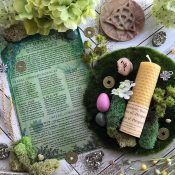
The principle of correspondence also directs us to the most harmonious tools and spell accoutrements for our magick, as in a table of correspondences. Specific crystals and herbs can activate certain energies that are naturally associated with your various magickal goals. Color is a prime example. Yellow flowers, especially those with solar shapes like the sunflower, are typically associated or pe...


The Principle of Cause and Effect
This principle illustrates that there are no coincidences; nothing happens by chance. Chance is a name for an unrecognized law. I have seen this explained this way: “There are many planes of causation, but nothing escapes the law,” which is a classy way to say that for every spell outcome there is a prior action, or cause. What we send out energetically or through spellwork, be it positive or bane...

The Principle of Gender
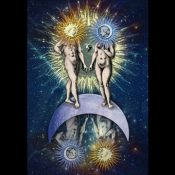
This principle is simply the law of polarity put in action. Masculine and feminine principles are always at work in the world, whether we recognize them or not. We are all a blending of both masculine and feminine energies. Classically, feminine energy is considered to be magnetic, as feminine energy draws in and is nurturing and yielding, while masculine energy projects out and is strong and asse...

The Principle of Rhythm
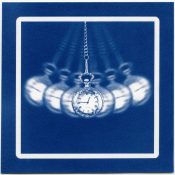
This principle teaches us that everything flows and all things are in some way circular or cyclical. In order for our magick to be most effective, we must work with the natural rhythms of the seasons, the wheel of the year, the moon, and the rhythm of our lives. In the spring new life pushes its way into being. Energy, enthusiasm, and new beginnings are the tides of energy. In the summer there is ...


Seven Hermetic Principles
The Principle of Polarity This principle shows us that everything is relative to something else—all things have an opposite, and all things are dual. Poverty is at one end of the scale and wealth is at the other. Also, here is a big mystery for you to wrap your mind around: each of the opposite characteristics contains the essence of the other; the best example of this thought is the yin and yang ...
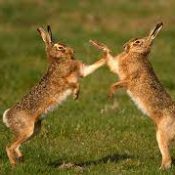

Hares
Despite hares being seen as unlucky in British Folklore, its actually a white hare that was thought to be unlucky, well more so a foreboding + that your normal brown hares crossing your path was lucky. Then there’s the whole thing of witches disguised as hares……..well more so they were believed to use hares as a distraction. Some say that a witch could put their fetch into a hare (or rabbit) or co...


St. Frideswide’s well
St. Frideswide’s well is found in the village of Frilsham, Berkshire. This small place is rich in history, legend, and spiritual tradition. Across the British Isles, many holy wells like this one exist. Each has its own story and meaning. For centuries, people have visited these sacred sites to ask for healing, protection, or even to seek justice. In folk magic, wells are seen as special places th...