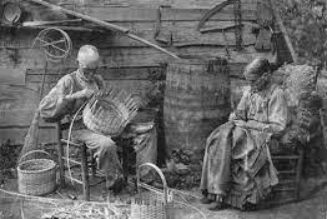
One of the most enduring figures associated with Appalachian tradition is the granny woman.
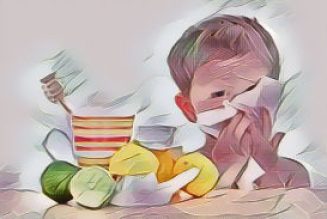
The term could describe an older woman respected for practical knowledge, particularly concerning childbirth, herbal remedies and household healing. In isolated communities where professional medical treatment might be many miles away, such knowledge could be extremely important.
This should not automatically be confused with modern Witchcraft.
Some traditional healers would have considered themselves devout Christians and might have strongly rejected the word Witch. Others lived within communities where supernatural folk beliefs existed comfortably alongside Christianity.
That combination may seem strange to a modern Pagan, but folk traditions rarely fit neatly into modern religious categories.
A healer might use an herbal preparation while also saying a prayer.
Someone might carry a protective charm while attending church every Sunday.
A family might believe in supernatural signs without considering themselves anything other than Christian.
For today’s Pagan Witch, the interesting element is the way practical knowledge and spiritual belief were intertwined.
Plants were especially important.
People living close to the land learned which plants could be eaten, which were useful around the household and which had traditional medicinal uses.
Modern practitioners should be careful here. Historical herbal remedies were not always safe, and traditional use does not prove that a plant is medically effective. Some plants used historically can be poisonous.
But herbs can still be incorporated symbolically into Pagan practice.
Rosemary might represent remembrance.
Oak leaves might represent strength.
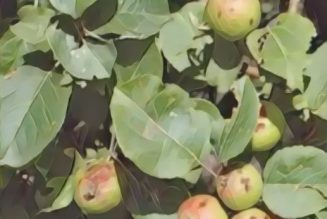
Apples might represent abundance.
Locally gathered fallen leaves, stones or twigs can represent connection with the land.
Another important practice associated with Appalachian folklore is dowsing.
A person might use a forked branch or other simple tool while searching for underground water. Practitioners were sometimes popularly called water witches, although dowsing itself was not necessarily considered Witchcraft by those practising it.
From a modern magical perspective, however, the idea is fascinating.
The dowser walks slowly across the landscape, concentrating upon subtle movements of the tool and attempting to discover something hidden beneath the visible world.
A solitary Witch might adapt the principle symbolically rather than claiming supernatural certainty.
A pendulum, forked twig or simply one’s intuition might be used when meditating upon a decision.
Household protection was another important part of folk belief.
Doors, windows and fireplaces naturally became significant because they represented boundaries.
They were places where the outside entered the inside.
For a modern Witch, this concept remains extremely useful.
A doorway can symbolise the boundary between your private spiritual space and the outside world.
A simple protective practice might therefore involve cleaning the doorstep while imagining unwanted influences being swept away.
The important principle behind such folk magic is simplicity.
Use what is available.
Work with your surroundings.
Observe nature.
Learn the folklore of your own landscape.
And remember that magical practice does not have to be complicated to feel meaningful.