In the green hills of Somerset, there is a place that has inspired seekers, storytellers, and spiritual pilgrims for centuries: Avalon. This legendary isle is most widely known as the final resting place of King Arthur, whose story ends in both peace and mystery. Over time, Avalon has become closely associated with the modern town of Glastonbury, where history and myth often seem to merge.
Glastonbury is a landscape rich in legend, marked by ancient ruins, sacred springs, and the prominent Tor rising above the fields. The area is filled with stories of druids, saints, and witches, all woven into its history. Even today, Glastonbury attracts those interested in the mystical and the unknown.
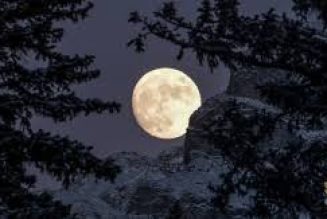
The Tor, a striking hill topped by the tower of St. Michael’s Church, has long been central to tales of the supernatural. For generations, there have been stories of midnight gatherings on the Tor, where witches and wise folk would meet under the moon. These accounts, mentioned in Alfred Gordon Bennett’s “Focus on the Unknown” (1953), contribute to the area’s reputation for occult activity.
Today, Glastonbury continues to draw a wide range of spiritual seekers. Occult societies, many unrelated to historical witch cults, are attracted to the Tor’s ancient energy. They gather here, sometimes privately, to honor the land and participate in rituals that reflect those of earlier times.
Glastonbury is unique in its dual spiritual significance. Both pagans and Christians find meaning in its landscape. An old poem, the “Prophecy of Melkin, or Maelgwyn,” suggests that Avalon was once a major pagan burial ground, long before Joseph of Arimathea arrived and established what is believed to be the first British Church of Celtic Christianity. This layering of traditions gives Glastonbury a distinctive atmosphere, where ancient deities and Christian saints are both honored.
The Tor was once thought to be the domain of Gwyn ap Nudd, a Celtic god of the dead and King of the Fairies. In local folklore, he is remembered as the Wild Huntsman, riding the night skies over Wales and the West Country. The Saxons called him Woden, connecting him to their own gods.
The influence of these ancient beliefs is seen in the church built atop the Tor and dedicated to St. Michael. This was intended to sanctify the hill and counter the lingering energies of the old gods. However, a landslide destroyed most of the church, leaving only the tower—a reminder of both human effort and the enduring power of the land.
The Tor’s terraced shape has long interested archaeologists and spiritual seekers. Some believe these terraces are the remains of an ancient processional path, spiraling upward for rituals of cleansing and purification. Climbing the Tor in this way can be seen as a metaphor for a spiritual journey, moving from the ordinary to the sacred.
At the base of the Tor is Chalice Well, a site known for its mystery and healing properties. The well is built from large stones, which archaeologist Sir Flinders Petrie believed to be Neolithic. He noted their precise fit, similar to the pyramids of Egypt. The waters of Chalice Well have long been credited with healing powers, and many still visit to drink from its iron-rich spring.
Local tradition also mentions a hidden cave within the Tor, possibly a forgotten shrine where ancient rituals took place. The names Chalice Well and Chalice Hill are linked to stories of the Holy Grail, the legendary vessel said to be hidden in the Glastonbury area. These legends have inspired many quests, both physical and spiritual.
The story of the Grail is older and more complex than often assumed. Early legends show that the Grail was not always a chalice; it took many forms. In some traditions, it closely resembles the Sacred Cauldron of Cerridwen, a goddess of nature, the moon, and inspiration, honored by the ancient Druids. The cauldron, often associated with witches, is another version of Cerridwen’s vessel, as described by Lewis Spence in “The Mysteries of Britain.”
The Holy Grail and the witches’ cauldron both have roots in ancient nature worship. Both symbolize transformation, rebirth, and the mysteries of life and death—universal themes that have persisted through time.
The name “Avalon” means “The Place of Apples,” and this symbolism is significant. Somerset, where Glastonbury is located, is still known for its apple orchards and cider. The tradition of cider-making is ancient, and the apple tree has long been considered sacred—a connection between the everyday and the magical.
Archaeological evidence, such as that cited by Stuart Piggott in “Ancient Europe,” indicates that apples were cultivated in Britain as early as 3000 B.C. The apple tree, which produces a powerful and intoxicating fruit, has been seen as a source of magic. Even today, some in the West Country view strong cider as a witches’ brew, filled with the spirit of the land.
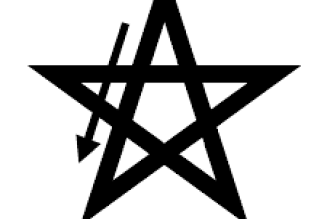
The apple’s sacredness is also seen in the pentagram, or five-pointed star, hidden within its core. When an apple is sliced across its middle, this star shape appears—a natural symbol of protection, magic, and the cycles of life.
In modern witchcraft, the apple and pentagram remain important symbols. During rituals, a priestess may stand with feet together and arms crossed to represent the God of Death, then open her arms and stand with feet apart to become the living pentagram, symbolizing the Goddess of Life and Rebirth. This gesture represents the ongoing cycle of death and renewal.
Ancient pagans believed in reincarnation, and so Avalon—the Place of Apples—became a symbol of both death and rebirth, a place where endings and beginnings meet. This idea is reflected in the legendary inscription on King Arthur’s tomb: “Here lies Arthur, the once and future King.” These words express the promise of return and renewal, and the spirit of Avalon continues to inspire those who seek transformation.