
Author: A Solitary Pagan
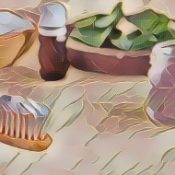

Random Natural Remedies Homemade Toothpaste
Mix ¼ teaspoon hydrogen peroxide and ½ teaspoon baking soda, scoop the paste up with your toothbrush and proceed as you normally would.


Random Natural Remedies Eye Make-up Remover (Safe and Gentle)
Save on those very expensive eye make-up removers with this recipe. Combine 1 tablespoon canola oil, 1 tablespoon castor oil, and 1 tablespoon light olive oil. For use on your entire body, put some castor oil in a little spray bottle. To maximize absorption, spray it on your skin after showering and gently rub it in while your skin is still warm and your pores are open.


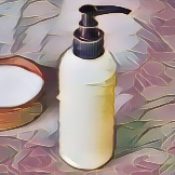

Random Natural Remedies Simple Shampoo
Simple Shampoo Old-fashioned Castile soap can also be dissolved in warm water to be used as shampoo. After shampooing, rinse your hair with lemon juice to make it shine. Adding essential oils to store bought shampoo If you like your store-bought shampoo but would like to add to it a little, the essential oils that old-timers relied on for hair care really do work.

Random Natural Remedies Homemade Minty Toothpaste
To make toothpaste with a more traditional toothpaste consistency and a mint-y taste, mix together 6 teaspoons of baking soda, 1/3 teaspoon salt, 4 teaspoons glycerin, and 15 drops of peppermint or wintergreen extract. Depending on how much you use at a time, this recipe is good for 15-20 applications and should be stored in any appropriately sized container with a snug lid.
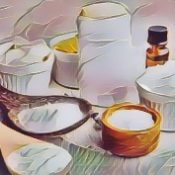

Random Natural Remedies deodorants
The best deodrants is plain old baking soda. You can pat it right onto your skin or mix it with a little cornstarch for extra staying power and moisture control. Try 1/2 cornstarch and 1/2 baking soda. Some readers say that mixing in anti-bacterial tea tree oil makes it even more effective. .
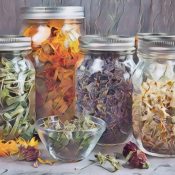

Collecting Herbs for Magical Workings, Storing and Preparing for Use.
To use the herbs fresh, simply wash them in cool water and pat them dry. They can be kept lively for a few days by putting them in a vase of water and keeping them in a cool area (if your fridge isn’t too cold, that’ll do nicely).If you wont be using them within a few days, or want to put them in a sachet, tea or incense, you will probably need to dry them.Tie a string around the base of a bunch o...


Collecting Herbs for Magical Workings, Use Them!
Record any observations you make while working with the herb along with it’s location in your harvest journal. If the plant is particularly fragrant or effective, write it down so you know to go back! If it doesn’t work well for you, make note of that, too.


Collecting Herbs for Magical Workings, Giving Thanks.
Having taken from the plant, you should give thanks for the gift. Tell it that you’re grateful, and assure it that it wont be misused. Then, provide payment!Pour the fertilizer you brought at the roots of the plant. If you stumbled upon the plant accidentally and don’t have your fertilizer with you, make some other form of offering. Traditionally, a small coin at the base of the plant can show you...


Collecting Herbs for Magical Workings, Harvesting.
Using your sharp implement, make a clean, angular cut near a joint. This will make it easier for the plant to heal and regrow. You will want to choose a portion of the plant that is not the oldest (dark and woody), and not the youngest (the lightest with the most budding leaves). A good middle-aged branch is best. Be sure to never take more than 25% of the total plant growth. While you are harvest...


Collecting Herbs for Magical Workings, Asking Permission.
Before you cut the plant, you should take some time to connect with it. Examine it to see if it is healthy. Take your time identifying it. Feel the plant’s energy and let it get to know you. Once you’ve determined that the plant is a good candidate, you should ask its permission to take it.This process is intuitive. Some believe you should ask aloud, others that you can ask silently, communicating...


Collecting Herbs for Magical Workings, Finding Your Herbs.
forests or natural fields on public land, but for many it can be a challenge to source wild herbs.If you live in a city, find out if there are any nature trails or reserves in your area, then check what their policies are. You can also search for vacant lots, or neighbors with a green thumb. Make sure to ask before helping yourself! Sometimes you can find areas beneath power lines where herbs and ...