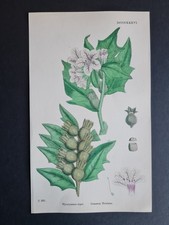
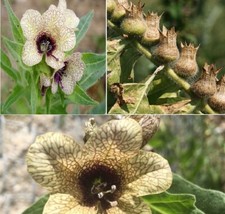
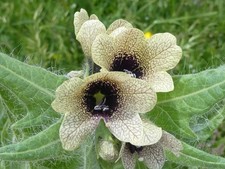
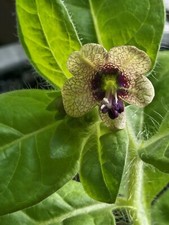
Henbane (Hyoscyamus niger) has long held a place in the folklore, mythology, and magical traditions of Europe. With its pale yellow flowers veined in deep purple and its strange, unpleasant scent, it is a plant that has inspired both fascination and fear. Throughout history it has been associated with prophecy, spirit work, altered states of consciousness, and the mysteries of the unseen world.
In many pagan traditions, Henbane is regarded as a plant connected with the Underworld and the liminal spaces between the physical and spiritual realms. It has often been linked with deities associated with death, transformation, wisdom, and magic. Some practitioners believe that simply growing Henbane in a sacred or carefully managed garden can serve as a symbolic reminder of the balance between life and death, light and darkness, and the importance of respecting nature’s more dangerous gifts.
Historically, Henbane was one of several plants associated with the legendary “flying ointments” of European folklore. Stories tell of witches using preparations containing Henbane and other poisonous plants during ritual practices intended to produce vivid visions or spiritual experiences. Modern historians continue to debate the exact nature of these accounts, and many are believed to have become heavily embellished over the centuries.
Today, contemporary pagans and witches who work with Henbane almost always do so symbolically rather than physically. The plant may be placed on an altar as a representation of hidden knowledge, intuition, shadow work, or transformation. Its seed pods and dried stems are sometimes displayed in seasonal decorations celebrating Samhain, when many pagans honour their ancestors and reflect upon the cycle of life, death, and rebirth.
Henbane is also sometimes associated with protection from harmful influences, not because it is carried or handled frequently, but because its fierce reputation reminds practitioners to establish strong spiritual boundaries before undertaking magical or meditative work.
It is important to remember that Henbane is an extremely poisonous plant. Every part of it contains toxic alkaloids capable of causing severe illness or death if ingested, and even handling it should be approached with care. Modern pagan practice strongly discourages any attempt to consume or experiment with Henbane. Instead, its value lies in its rich symbolism, historical significance, and its enduring role as one of the most mysterious plants in the history of European witchcraft and pagan tradition.