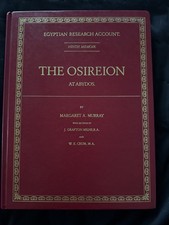
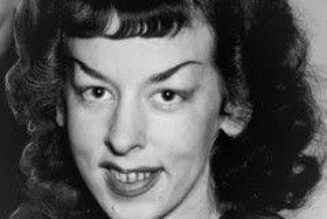
Margaret Murray was a British Egyptologist, archaeologist, anthropologist and folklorist whose ideas had a major influence on how people came to understand the history of witchcraft and Pagan religion.
Born in Calcutta, India, in 1863, Murray later moved to Britain and studied at University College London. There she worked with the famous archaeologist Sir Flinders Petrie. At a time when archaeology and Egyptology were largely dominated by men, Murray established herself as one of Britain’s pioneering female Egyptologists. She took part in archaeological work in Egypt and Malta and became a respected lecturer and researcher.
However, outside Egyptology, Murray became best known for her controversial theories about European witchcraft.
In her 1921 book The Witch-Cult in Western Europe, Murray suggested that some of the people accused of witchcraft during the European witch trials had actually been followers of a surviving pre-Christian Pagan religion. She developed these ideas further in The God of the Witches, published in 1931.
Murray argued that this ancient religion had survived secretly after Christianity became dominant in Europe. According to her theory, its followers gathered for ceremonies, celebrated seasonal festivals and worshipped a horned deity associated with nature and fertility.
This was a very different interpretation of witchcraft from the traditional Christian belief that witches were servants of Satan.
Murray believed that behind at least some of the witch-trial accounts were traces of genuine Pagan beliefs and ceremonies. She attempted to examine trial records and confessions to reconstruct what she believed this hidden religion had looked like.
Her theory attracted enormous attention and became surprisingly influential. However, historians increasingly challenged Murray’s methods and conclusions. Modern scholarship generally rejects the idea that the European witch trials uncovered members of a single organised Pagan religion surviving from ancient times. Critics argue that Murray selected evidence that supported her theory while giving insufficient attention to contradictory material. Many witch-trial confessions were also obtained through torture, intimidation or leading questions, making them unreliable descriptions of actual religious practices.
Yet rejecting Murray’s theory as history does not mean her influence can be ignored.
Her books helped create a very different popular image of the witch. Instead of seeing witches simply as evil figures associated with the Devil, readers could imagine them as survivors of an older Pagan spiritual tradition.
This idea became particularly important during the development of modern Pagan Witchcraft in the twentieth century. Gerald Gardner, who became one of the most important figures in the emergence of Wicca, was influenced by Murray’s interpretation of an ancient surviving witch religion. Her work therefore became part of the intellectual background from which modern Wicca developed.
Margaret Murray died in 1963, shortly after reaching the remarkable age of 100.
Today, she remains a fascinating and controversial figure. Her witch-cult theory is no longer regarded as reliable history by most scholars, but its cultural influence was enormous. Murray helped transform the modern image of witchcraft and contributed, indirectly but significantly, to the development of contemporary Paganism and Witchcraft.


![My First Hundred Years [First Edition] Margaret Murray-1963](https://i.ebayimg.com/images/g/67oAAeSwVbhqq-2w/s-l225.jpg)